
Neuro-Balance Therapy
According to the Centers for Disease Control and Prevention, an older adult in the United States experiences a fall every second of every day. Falls are a leading cause of injuries and fatalities among seniors, particularly those living at home. Fortunately, enhancing balance and stability can significantly reduce the risk of falls.

balance exercises for seniors
Improving balance is achievable through targeted exercises that strengthen key muscle groups and neural pathways. As we age, our balance naturally deteriorates, but specific exercise regimens can counteract this decline. It is essential to consult with a doctor before starting any new exercise programme, especially if you have pre-existing health conditions.
Key Takeaways
- Neuro-Balance Therapy can significantly improve stability and reduce fall risk.
- Targeted exercises can enhance coordination and overall quality of life.
- Simple balance techniques can be performed safely at home.
- Consulting a doctor before beginning any new exercise regimen is crucial.
- Improving balance can maintain independence in older adults.
Why Balance Training Is Crucial for Seniors
For seniors, balance exercises are not just beneficial; they are essential for maintaining mobility and preventing falls. As individuals age, their risk of experiencing a fall increases, potentially leading to serious injuries and a decline in overall health.
Understanding the Risks of Falls
Falls are a significant concern for seniors, often resulting in fractures, head injuries, and other complications that can severely impact their quality of life. People who’ve had a stroke or have peripheral neuropathy (nerve damage) and those who take multiple medicines are particularly at risk.
Health Benefits of Improved Balance
Regular balance training offers numerous health benefits, including:
- Strengthening core muscles that help maintain proper posture and stability during everyday activities.
- Improving joint health and flexibility, particularly in the ankles, knees, and hips, is crucial for maintaining stability.
- Enhancing coordination between the brain and muscles leads to better reaction times and reduced risk of falls.
- Increasing overall physical confidence, reducing anxiety about falling, and encouraging more active participation in daily life.
By incorporating balance exercises into their routine, seniors can enjoy greater mobility and independence, allowing them to continue activities they enjoy with confidence. Balance training can be particularly beneficial for those with specific health conditions, such as stroke recovery or peripheral neuropathy.
Essential Balance Exercises for Seniors
ENJOY PRODUCTS I USE ON Clickbank HERE
BUY NOW Here Neuro-Balance Therapy
BUY NOW Here Neuro Thrive Brain Support
Improving balance through specific exercises can greatly enhance the quality of life for seniors. Balance exercises are designed to strengthen the muscles, improve flexibility, and enhance overall stability. By incorporating these exercises into their daily routine, seniors can significantly reduce their risk of falls and related injuries.
Single Leg Stance
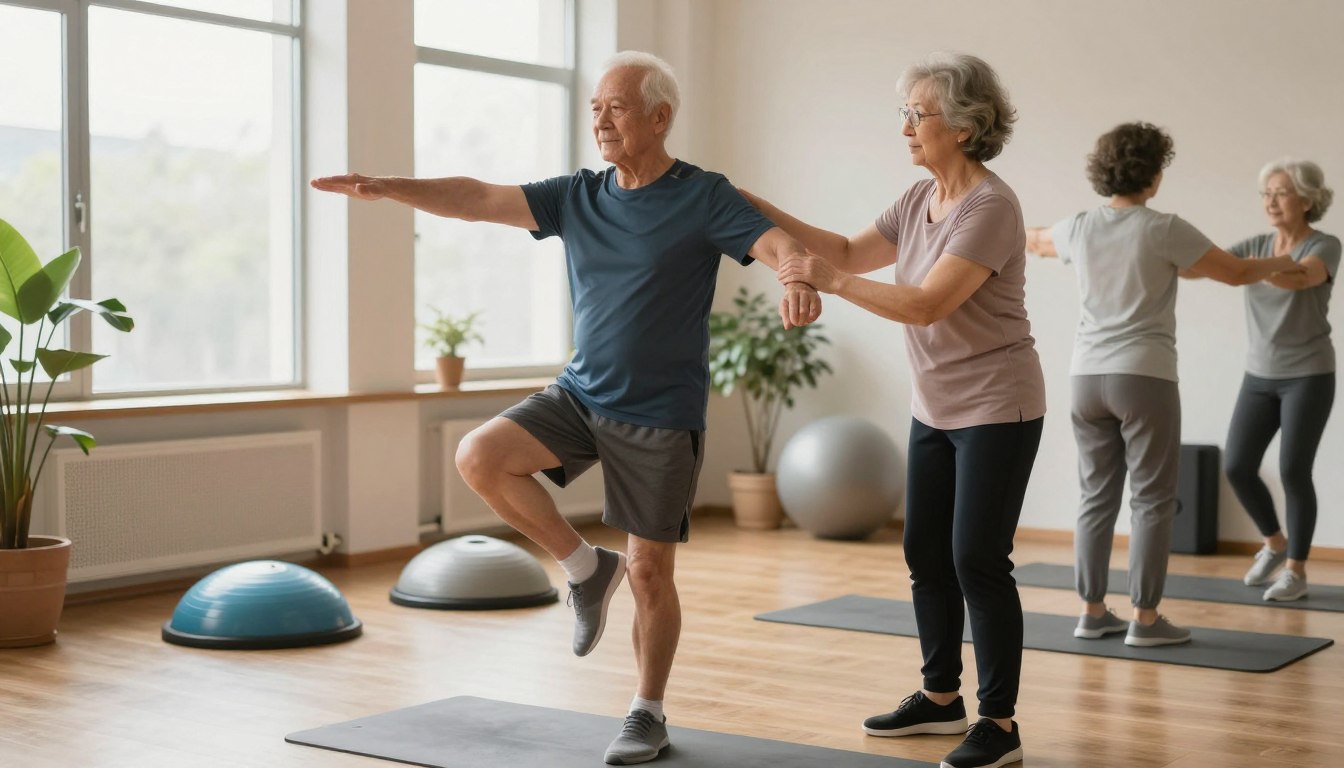
To perform this exercise, stand on one leg, holding onto a chair or wall for support if needed. Hold the position for a few seconds, then switch legs. This exercise helps to strengthen the muscles in the legs and improve overall balance.
Tips: Start with shorter holds and gradually increase the duration as your balance improves.
Heel-to-Toe Walk
The Heel-to-Toe Walk is another effective balance exercise. To perform this exercise, walk along a straight line, placing the heel of one foot directly in front of the toes of the other foot. This exercise improves balance and stability by challenging the body’s proprioception.
Benefits: Enhances balance and reduces the risk of falls by improving proprioception.
Side Leg Raises
Side Leg Raises are an excellent exercise for strengthening the hips and improving balance. To perform this exercise, stand with your feet shoulder-width apart and slowly lift one leg out to the side, keeping it straight.
- Stand with your feet shoulder-width apart.
- Lift one leg out to the side, keeping it straight.
Chair Squats
Chair Squats are functional exercises that directly improve the ability to rise from a seated position—a common challenge for many seniors.

balance exercise
Stand up, pushing through your heels, and then slowly lower yourself back down to a seated position. For an added challenge, hover just above the chair seat for 2-3 seconds before sitting completely down.
Aim for 8-12 repetitions, gradually increasing as your strength improves.
Advanced Balance Techniques to Improve Stability
As individuals progress in their balance training journey, incorporating advanced techniques becomes essential for continued improvement. Advanced balance techniques are designed to challenge the body’s balance control systems, enhancing overall stability and reducing the risk of falls.
Clock Reach Exercise
The Clock Reach exercise is a dynamic balance challenge that involves reaching in different directions while standing on both feet. To perform this exercise, stand with your feet shoulder-width apart and imagine a clock face in front of you. Reach forward to the 12 o’clock position, then to the 3, 6, and 9 o’clock positions, and finally back to the centre. This exercise helps improve balance by challenging the body to maintain its centre of gravity while moving the arms. Repeat the sequence several times, holding each position for a few seconds.
Tandem Walk
The Tandem Walk is another effective exercise for improving balance. It involves walking along a straight line, placing the heel of one foot directly in front of the toes of the other foot. This mimics a tightrope walker’s gait and requires concentration and balance control. Start by practising over a short distance and gradually increase the length as your balance improves. Keep your arms out to the sides for additional stability if needed.

balance exercise
Standing Leg Swings
Standing Leg Swings are a simple yet effective way to enhance balance and strengthen the legs. Stand with your feet hip-width apart and hold onto a wall for support if necessary. Slowly swing one leg forward and backward, then switch to the other leg. This exercise challenges your balance by shifting your weight onto one leg while the other leg is in motion. Perform the exercise for several repetitions on each leg.
Wall Push-ups
Wall Push-ups are an excellent exercise for building upper-body strength while also challenging your balance and core stability. Begin by standing facing a wall at arm’s length distance, with your feet hip-width apart. Slowly bend your elbows to bring your chest toward the wall while keeping your feet firmly planted. Start with 8-10 repetitions and gradually work up to 15-20 times as your strength improves.
By incorporating these advanced balance techniques into your exercise routine, you can significantly improve your overall stability and reduce the risk of falls. Regular practice and gradual progression are key to achieving the best results.
Incorporating Balance Exercises into Your Daily Routine
Enhancing your balance through regular exercise is a simple yet effective way to improve your stability and prevent falls. By incorporating balance exercises into your daily routine, you can significantly reduce your risk of falling and related injuries.
To start, it’s essential to create a consistent balance training routine. Begin by setting aside 10-15 minutes daily for dedicated balance exercises, preferably when you feel most energetic and alert. Stand with your feet hip-width apart for most standing exercises, ensuring you have a chair or wall nearby for support.
Integrate simple balance challenges into your everyday activities. For example, try standing on one foot while brushing your teeth or doing heel raises while waiting in queues. Gradually increase the difficulty by extending the time you hold positions, starting with 10 seconds and working up to 30 seconds or longer.
It’s also important to complement your balance exercises with other forms of physical activity, such as walking, swimming, or chair yoga, to improve overall fitness and enhance balance further. Always consult with your doctor before beginning any new exercise regimen, especially if you have existing health conditions or mobility concerns.
By following these tips and maintaining a consistent routine, you can improve your balance and reduce your risk of falls. Make balance exercises a part of your daily life to enjoy a more stable and active lifestyle.